

In honor of Women’s History Month, we are showcasing three women connected to CRLC, who share our mission of Bridging Cultures and Connecting Communities.
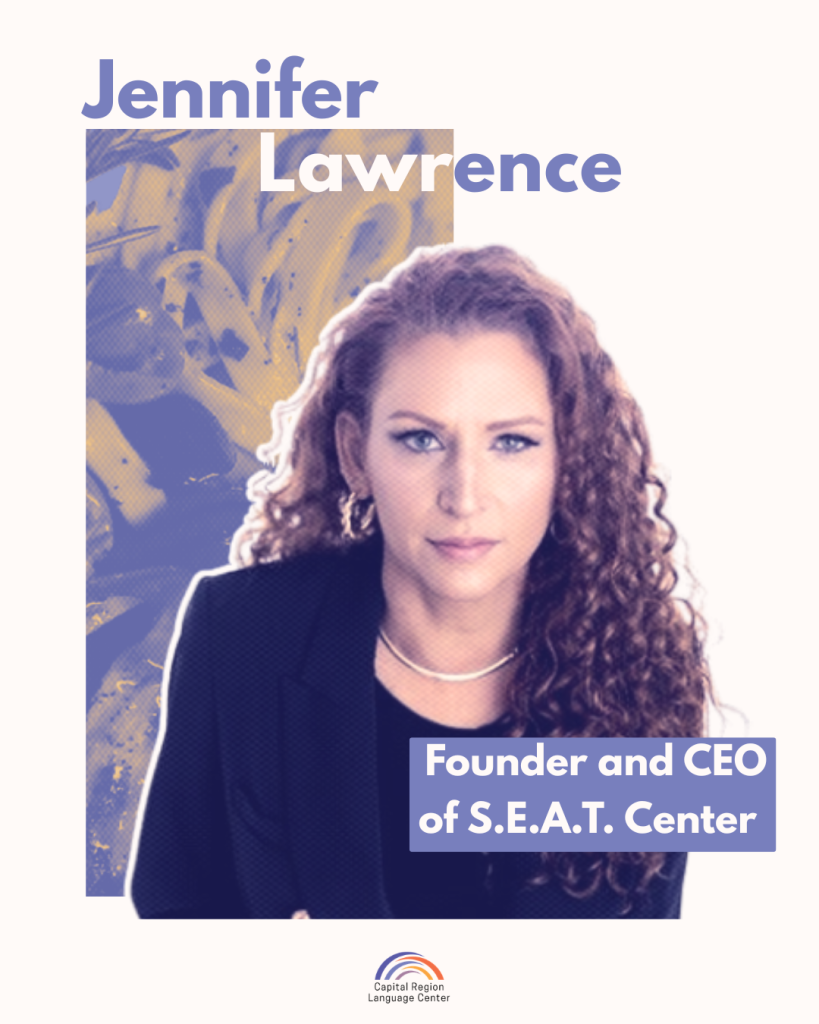
Why did you launch the SEAT Center?
SEAT (Social Enterprise and Training) Center started in 2015 with the goal to to connect young people to meaningful work through an array of programs and services. Since then, our program has expanded across the Capital Region.
We try to give young adults a “seat at the table” through transformative educational and workforce experiences that create a sense of purpose and hope in our communities and connect business to real time solutions. Our current programs focus on construction, culinary, HVAC and film.
What is your connection with Capital Region Language Center?
I have been hosting international students since I started SEAT Center. It was a way to supplement income while building the program. Darryl, who came from the Democratic Republic of Congo, attended English classes full-time at Capital Region Language Center through its Empire State English program.
He got his GED while living with me, went on to Fulton-Montgomery Community College and played soccer there. He and his wife still live locally and are expecting a baby soon!
My son, Anthony, is an only child and growing up it was good for him to have international students in the house. We hosted five students, starting when he was 15 years old. It helped us look at life from someone else’s viewpoint. It brought the world into our home. Now, I still help find families for other international students.
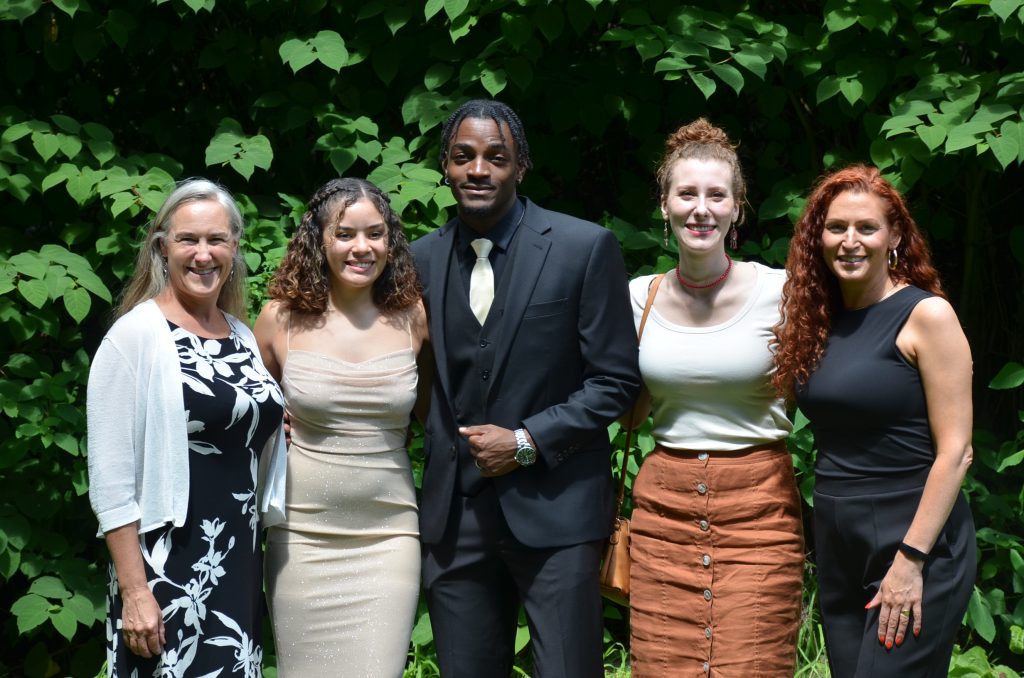
CRLC Founder Kim Andersen (left) with Darryl and Jennifer (right) at his wedding.
CRLC recently hosted an event at your newest program, Hattie’s Culinary Lab, Powered by SEAT Center. How can people learn more about it?
Check out our site: hattiesculinarylab.org Our students are serving lunch on Wednesday’s from 11am – 1pm and dinner from 5pm – 8pm, Wednesday – Friday. You can also make a reservation on Resy. We love hosting private events like CRLC’s recent party for staff and students.
The lab is located at the former Lombardo’s restaurant in Albany. We worked with the local group Business for Good to create a training ground for both front-of-house and back-of-house restaurant positions. SEAT culinary students are studying a National Restaurant Association curriculum under the guidance of an executive chef. They train two days a week, then spend two days in Hattie’s Culinary Lab. It is operating as a full restaurant and bar – it’s very exciting, the food is delicious and our students are amazing!
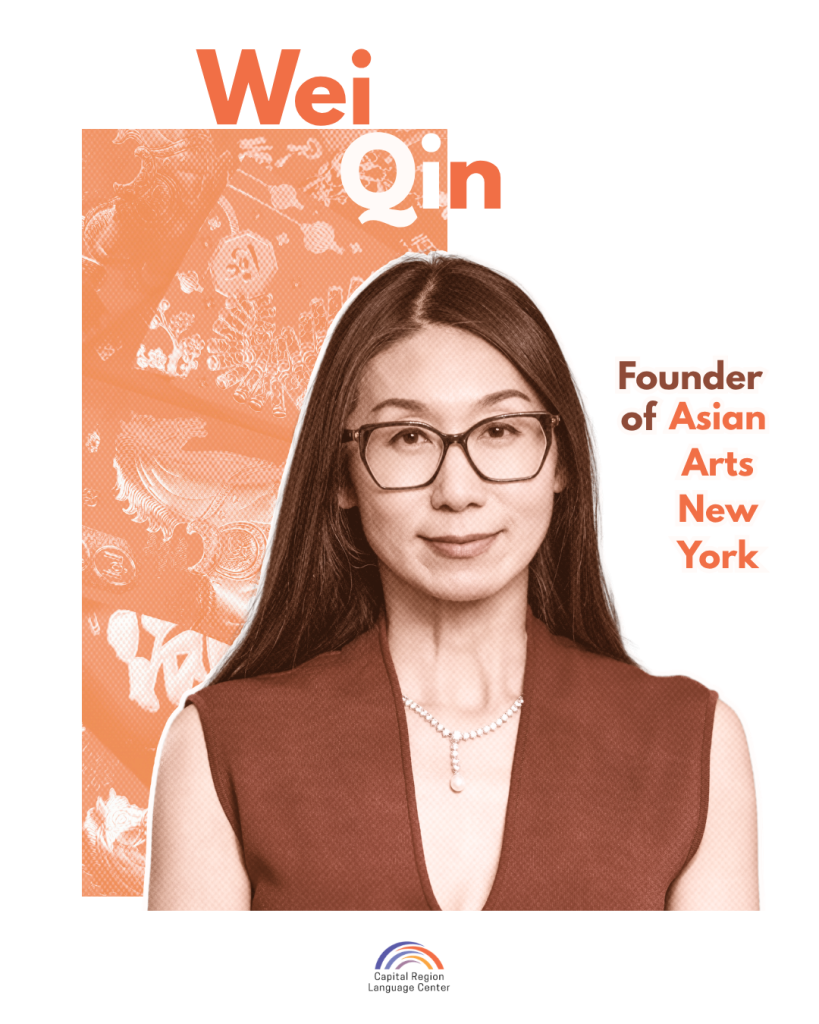
How long has Asian Arts NY been in existence?
We began Asian Arts NY a year ago, in March, 2025. It came from my involvement in the Asian art community. I was seeing that each single cultural community is busy with their own thing. Maybe they participated in a big event together once or twice a year. I
For a long time, Asian art has been considered minority art, and it tended to stay within its own cultural community. I realized artists don’t have the support and inspiration to do new things. I wondered what it would be like to create a platform dedicated to supporting Asian artists and art in the Capital Region, as well as those not Asian by blood, but who practice Asian art.
Now, our goal is to secure year-round funding to support Asian arts, including cross-cultural performances. want to present art in an organized, professional way, create more visibility and power by bringing a bigger group of artists together.
How did you connect with Capital Region Language Center?
I learned about CRLC through Xuehan Liu, a Mandarin Chinese instructor. She also performs beautiful traditional Chinese dances in the community. She introduced me to Kim Andersen and just looking at the website and things the school is involved in – it is way more than a language center.
Earlier this year, CRLC hosted an installation of Chinese art scrolls that Asian Arts New York lent them. They were displayed in the school for the annual Lunar New Year celebration. The traditional scrolls represent various good wishes for the new year.
It was wonderful to partner and we hope to keep providing events and art for CRLC students. It really is a benefit to both of us.
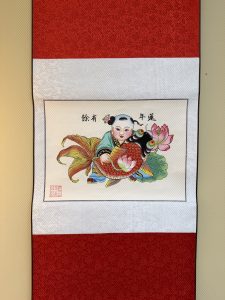
For the Lunar New Year, Asian Arts New York displayed Chinese art scrolls at Capital Region Arts Center.
How can people learn more and support Asian Arts NY?
There are so many ways! First, we have a special event on March 22nd. “A Music Dialogue: Bamboo Meets Brass on the Silk Road.” It will be at The Egg in downtown Albany. Next, in May, we’ll be hosting several events in honor of Asian Heritage Month.
If you are an artist, we’d love to connect with you. You can also learn about types of Asian Art and more about what we do on our website: asianartsny.org. We are a 501(c)3 not for profit, so you can donate to support our work. We are also happy to take any inquires about hosting art exhibits, providing programs. We are also looking to do more public events at local libraries and colleges, so you can reach us at: info@asianartsny.org.
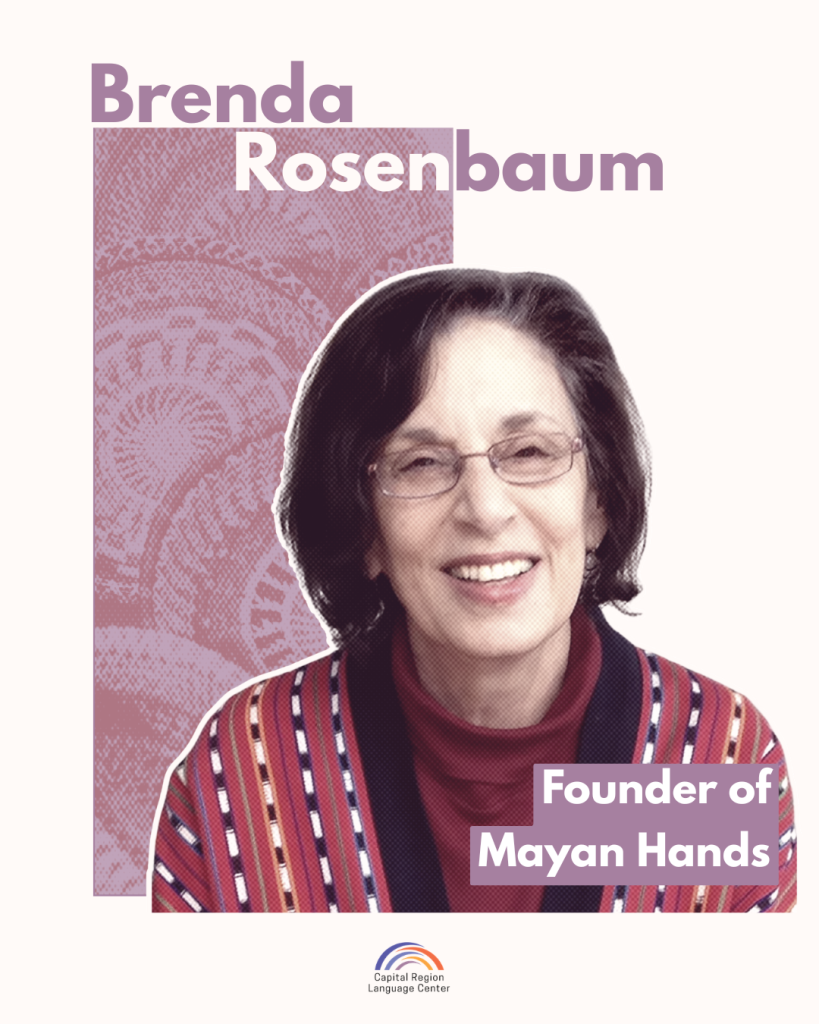
How did Mayan Hands begin?
Growing up in Guatemala City, I saw Mayan women all over the place, especially in the markets and on the streets. Their clothes were so colorful, so joyful. It was no surprise that I chose to study anthropology in college. I wanted to learn more about them and understand my country. I came up against the awful reality of racism and discrimination against the Maya as soon as I started going to Maya villages.
After I finished my degree at SUNY Albany, I taught anthropology there for a few years. However, I felt guilty of having taken so much from Guatemalan families and not giving anything back. In the early 1990s, my husband and I started exploring the possibilities of working with Maya people in a more applied way and Mayan Hands was born.
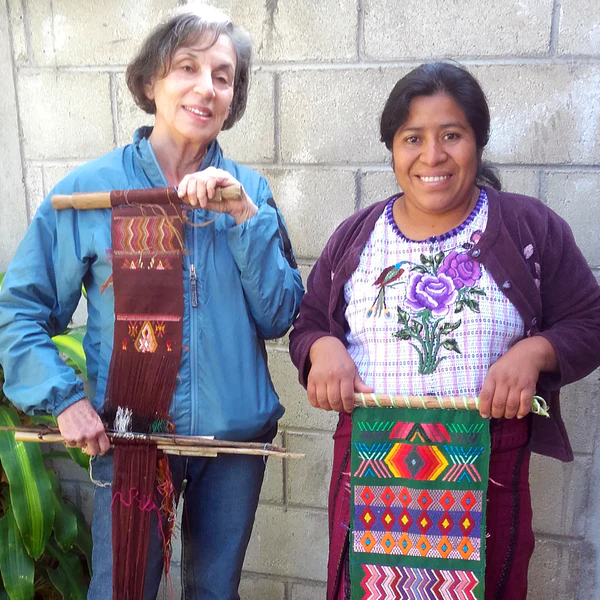
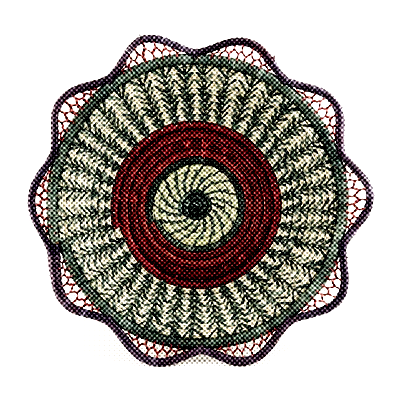
Today, we work with 15 artisan groups in the rural Guatemalan highlands, representing about 200 skilled craftswomen. We started with backstrap loom weavers, but have expanded our products to showcase the artisan partners’ wide range of skills: numerous styles of weaving, pine needle basketry, crochet, macrame, needle felting, and embroidery.
What is your connection with Capital Region Language Center?
I met Kim Andersen 20 years ago, when she was running Mango Tree Imports, her Fair Trade store in Ballston Spa. Kim began carrying our products and joined us on one of our weaving trips to see the artisans at work in Guatemala. For many years, our Operations Manager, Diane Yoder, also took Spanish language classes at CRLC.
Why do you focus on Mayan Women?
They are by far the poorest and most marginalized group in Guatemala. Admired the world over as amazing weavers, they have few opportunities to earn a living. We figure there are roughly three-quarters of a million weavers in Guatemala, but not enough of an internal market. So women end up selling their products at a price below cost or making very little money in the process. Our mission is to find more markets for these handcrafted goods.
How can people learn more and support Mayan Hands?
We sell hundreds of gorgeous handcrafted items on our website: www.mayanhands.org. You can order right online and pick up products at our Albany warehouse to save on shipping and reduce the carbon footprint! We love to sell products at local events, holiday bazaars and school craft fairs. You can host a trunk show and we have a wonderful friendship bracelet fundraising program that teaches students about Fair Trade. And we still run weaving trips to Guatemala!